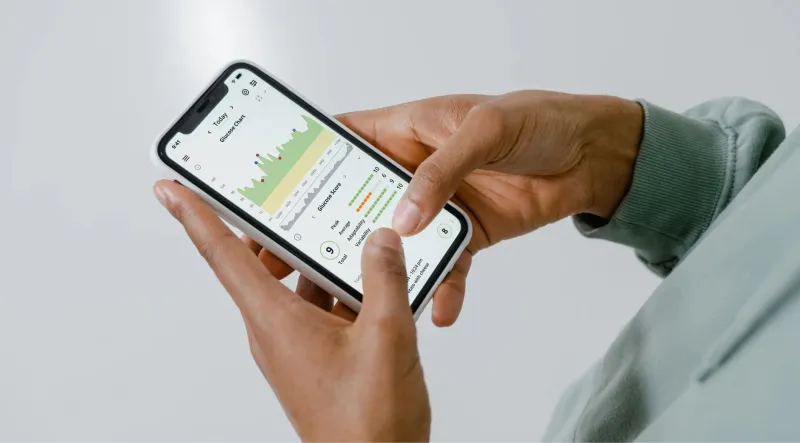
The Invisible Benchmark: How Experiences From Everyday Apps Are Quietly Judging Your Website

Photo by Photo by Balázs Kétyi on Unsplash on Unsplash
The Competitor You Never See Coming
Your most significant competitor online may not be another company in your industry. It may be a food delivery app, a streaming service, or a retail giant's mobile checkout experience.
This is not hyperbole. It is a reflection of how human expectations actually work. When a user visits your website, they are not arriving with a blank slate. They arrive with a deeply conditioned sense of how digital experiences should feel—shaped by thousands of prior interactions with products that have invested billions of dollars in perfecting their user experience.
Amazon has trained American consumers to expect instant product comparisons and one-click purchasing. Spotify has trained them to expect personalized content that anticipates their preferences. Uber has trained them to expect real-time status updates and frictionless transactions. DoorDash has trained them to expect transparent progress indicators and proactive communication.
None of these companies are in your industry. All of them are shaping how your customers judge you.
Cross-Industry Conditioning Is Not a Theory—It Is a Business Problem
The concept of cross-industry UX conditioning is not new in academic circles, but it remains dramatically underappreciated in how most businesses approach their web presence. Organizations tend to benchmark their digital experiences against direct competitors. If their website is better than the industry average, they consider the problem solved.
This framing misses the point entirely.
Consumers do not think in industry categories when they form expectations. They think in terms of effort. If completing a task on your website requires more effort than a comparable task on any other digital product they use regularly, your website feels inadequate—regardless of how it compares to your competitors.
This creates an invisible benchmark that is always rising and always expanding. Every time a major consumer platform improves its experience, your website is implicitly judged against a higher standard. The gap between expectation and reality widens without you changing a single thing.
The Patterns That Have Crossed Industry Lines
Certain UX conventions, once confined to specific sectors, have now become universal consumer expectations. Recognizing them is the first step toward designing deliberately in response to them.
Progressive disclosure and smart defaults. Financial technology applications have popularized the idea that complex processes should reveal themselves gradually, with intelligent defaults that reduce the cognitive burden on the user. Consumers now expect this from every multi-step process they encounter online—including contact forms, quote requests, and onboarding flows on business websites.
Persistent, contextual navigation. Mobile-first applications have conditioned users to expect navigation that adapts to where they are in a product experience. Static, one-size-fits-all menus feel disorienting by comparison—particularly on mobile devices, where the majority of US web traffic now originates.
Immediate feedback and status transparency. Ride-sharing and e-commerce platforms have made real-time status communication a baseline expectation. When a user submits a form on your website and encounters a static confirmation page with no indication of what happens next, that silence registers as friction—even if the process itself is working perfectly.
Micro-interactions that communicate responsiveness. The subtle animations that acknowledge a button press, confirm a selection, or indicate loading progress have become so pervasive in consumer applications that their absence on business websites creates a subliminal sense of staleness. These details are not decorative; they are functional signals that the system is alive and responding.
The Strategic Opportunity Hiding in Plain Sight
Most business websites in the United States are designed with their direct competitors as the primary reference point. This is understandable. It is also a significant strategic limitation.
Organizations that look beyond their industry for UX inspiration gain a compounding advantage. By studying the interaction patterns, information architectures, and feedback mechanisms of best-in-class consumer products, they can introduce experiences on their business websites that feel genuinely differentiated—not because they are technically novel, but because they meet users at the level of expectation they have already developed elsewhere.
This approach requires a deliberate shift in how competitive research is conducted. Rather than asking What are our competitors doing?, the more productive question becomes What experiences have our target customers already internalized as the standard for ease and quality?
The answers to that question are available through direct observation. Spend time using the applications your target audience uses daily. Notice what feels effortless. Notice what feels satisfying. Notice what creates trust without requiring explanation. Then ask, with honesty, whether your current website delivers anything comparable.
Designing With the Invisible Benchmark in Mind
Acknowledging the cross-industry expectation gap is necessary. Designing in response to it is the work.
This does not mean replicating consumer app aesthetics on a professional services website. Context matters enormously, and an inappropriate application of consumer UI patterns can undermine credibility rather than build it. The goal is not imitation. The goal is equivalence of effort—ensuring that the experience of navigating your website, finding relevant information, and taking meaningful action requires no more effort than users have been conditioned to expect from their best digital experiences.
Practically, this means auditing your website not against a usability checklist, but against a lived experience standard. Bring in users who have no familiarity with your industry and observe where they hesitate, where they second-guess themselves, and where they abandon their task. Their frustration will almost always map to a gap between what your website delivers and what their prior digital experiences have trained them to expect.
The invisible benchmark is real, it is rising, and it applies to every business with a web presence. The organizations that take it seriously will not merely keep pace with evolving user expectations—they will use those expectations as the foundation for a digital experience that genuinely stands apart.